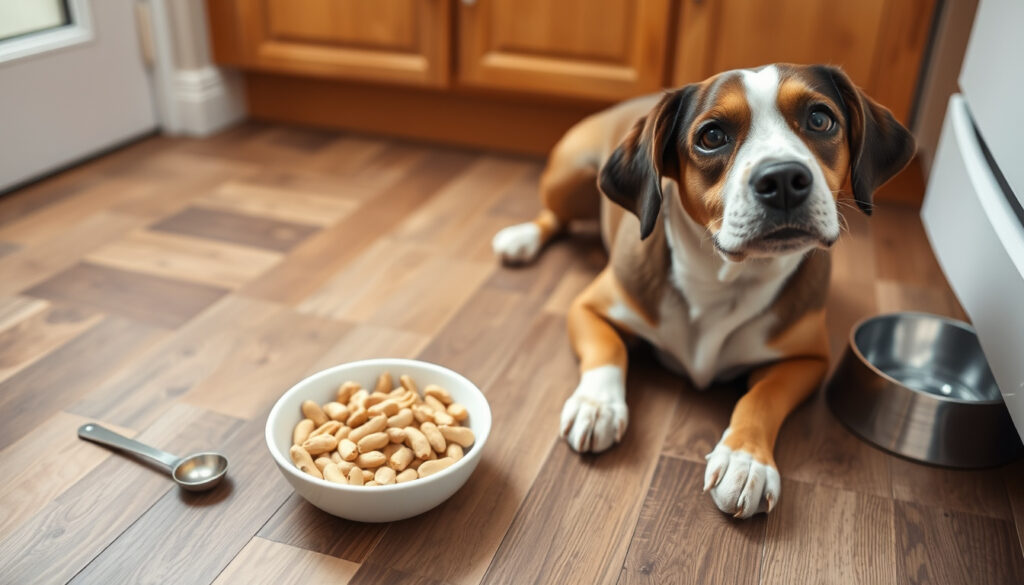
Can Dogs Eat Peanuts? Safety, Serving Sizes & Key Risks
If your dog has ever given you that hopeful look while you were munching on a handful of peanuts, you know the question hits fast: is this safe to share? The quick answer is yes—plain, unsalted, shelled peanuts are generally fine for dogs in small amounts, according to the American Kennel Club (leading canine registry and health resource).
Safe peanut types for dogs: Raw or dry-roasted, unsalted ·
Toxicity to dogs: Peanuts are not toxic ·
Recommended serving size: Small quantities only
Quick snapshot
- Peanuts are not toxic to dogs (American Kennel Club)
- Salted peanuts are unsafe in large amounts (American Kennel Club)
- Shells pose a choking hazard (American Kennel Club)
- Xylitol in peanut butter is dangerous (WebMD pet health resource)
- Exact safe number per pound of body weight not established (PetMD veterinary health platform)
- Long-term effects of occasional peanut feeding unknown (PetMD veterinary health platform)
- No chronic exposure timeline; effects from toxins (shells, salt, xylitol) appear within hours (American Kennel Club)
- Choose unsalted, shelled, dry-roasted or raw peanuts only (PetMD veterinary health platform)
- Check peanut butter labels for xylitol (WebMD pet health resource)
- Treat peanuts as an occasional snack, not a dietary staple (American Kennel Club)
A few key numbers help set the stage before diving into specifics. Here are the core facts every dog owner should know.
| Attribute | Value |
|---|---|
| Botanical classification | Peanuts are legumes, not tree nuts |
| Toxic substance to dogs | Xylitol (common in some peanut butters) |
| Caloric density | High fat content (~14g per ounce) |
| Safe preparation | Raw, dry-roasted, unsalted, shelled |
Are peanuts toxic for dogs?
No, peanuts themselves are not toxic to dogs. The American Kennel Club (canine health authority) states that plain, unsalted, dry-roasted or raw peanuts are safe for dogs to eat in small quantities. The danger comes from what’s added or how they’re prepared.
- Salt coatings and seasonings can cause sodium poisoning or gastrointestinal upset (AKC).
- Peanut shells are a choking hazard and may be difficult to digest (AKC).
- Xylitol, an artificial sweetener found in some peanut butters, is highly toxic to dogs even in small amounts (Midtown Veterinary Practice (veterinary clinic)).
The implication: The peanut itself isn’t the enemy—it’s the processing and packaging that turn a harmless legume into a risk.
Honey-roasted, flavored, or seasoned peanuts often include garlic powder, onion powder, or other spices that can be toxic to dogs, according to Midtown Veterinary Practice (veterinary clinic). Stick to plain peanuts only.
The pattern: Unprocessed peanuts are safe; added ingredients are the danger.
How many peanuts can I give my dog?
Moderation is the key principle. The WebMD (pet health resource) advises that peanuts should make up no more than 10% of a dog’s daily caloric intake. For most dogs, that means just a few peanuts.
A practical serving guide from Petful (pet nutrition guide) suggests:
- Small dogs (10–25 lbs): 1–2 peanuts
- Medium dogs (25–60 lbs): 2–3 peanuts
- Large dogs (60–100 lbs): 4–5 peanuts
- Giant dogs (over 100 lbs): 5–6 peanuts
Overfeeding can lead to obesity or pancreatitis because of the high fat content—about 14 grams of fat per ounce, per the AKC.
What this means: A few peanuts here and there are fine, but turning them into a daily habit risks weight gain and digestive trouble.
Can dogs eat salted peanuts?
Salted peanuts are not recommended for dogs. The high sodium content can cause problems, especially if eaten in quantity. The American Kennel Club notes that salted peanuts can be harmful because of excess sodium. Symptoms of sodium poisoning include excessive thirst, vomiting, and diarrhea.
One or two salted peanuts probably won’t cause immediate harm for a healthy dog, but they should be avoided as a regular treat. Midtown Veterinary Practice (veterinary clinic) advises sticking to unsalted peanuts to stay safe.
The trade-off: A little salt for flavor isn’t worth the risk of a sick dog or a rushed vet visit.
A dog’s sodium tolerance is far lower than a human’s. Just a few salted peanuts can push a small dog into dangerous territory, especially if they have underlying kidney or heart conditions.
The catch: Even small amounts of salt can be risky for small dogs.
Can dogs eat peanuts in peanut butter?
Yes, but only if the peanut butter does not contain xylitol. WebMD warns that xylitol is highly toxic to dogs and can cause liver failure even in tiny amounts. Midtown Veterinary Practice calls peanut butter with xylitol the “most critical danger” among peanut-based treats.
Safe peanut butter is natural, unsalted, and unsweetened—ideally made from just peanuts and maybe a little oil. Spot & Tango (fresh dog food brand) recommends checking the ingredients list carefully and avoiding any brand that lists xylitol, sugar, or artificial sweeteners.
The pattern: When in doubt, read the label. If “xylitol” appears anywhere, that jar is off-limits.
Can dogs eat peanuts everyday?
Daily feeding is not recommended. The AKC states that peanuts should not be fed to dogs every day; moderation is key. The high fat and calorie content make them a poor candidate for a daily snack.
Regular consumption can lead to obesity and pancreatitis. PetMD (veterinary health platform) agrees that plain, raw or dry-roasted shelled peanuts are acceptable only in small amounts—and not as a staple. Petful echoes that peanuts should be an occasional treat only.
Why this matters: Treats are exactly that—treats. Peanuts fill no nutritional gap in a dog’s balanced diet, so reserve them for rare reward moments.
Upsides
- Plain peanuts are a safe, low-sugar snack option
- Provide protein and healthy fats in moderation
- Most dogs enjoy the taste, useful for training rewards
- Peanut butter (no xylitol) is a great treat stuffer for toys
Downsides
- High fat content can cause pancreatitis if overfed
- Salted/seasoned varieties are dangerous
- Shells are a choking hazard
- Some peanut butters contain xylitol, which is lethal
What we know vs. what remains unclear
- Peanuts are not toxic to dogs (American Kennel Club)
- Salted peanuts are unsafe in large amounts (American Kennel Club)
- Shells pose a choking hazard (American Kennel Club)
- Xylitol in peanut butter is dangerous (WebMD pet health resource)
- Exact safe number of peanuts per pound of body weight has not been established by veterinary studies (PetMD veterinary health platform)
- Long-term health effects of occasional peanut feeding remain unstudied
“Dry-roasted (or raw), unsalted peanuts are the only peanuts safe for dogs to eat.”
— American Kennel Club (canine health authority)
“Plain, unsalted, dry-roasted (or raw) peanuts are safe for dogs to eat in small quantities.”
— WebMD (pet health resource)
The decision to share peanuts with your dog comes down to reading labels and controlling portions. For owners in Canada, where salt-heavy snack seasonings and imported peanut butters with xylitol are common on store shelves, vigilance is essential. The choice is straightforward: stick with plain, unsalted, shelled peanuts in tiny amounts—or skip the legume altogether and pick a safer treat like carrot sticks or apple slices. The risk of a sick dog simply isn’t worth a momentary happy tail wag.
midtownveterinarypractice.com, impactdogcrates.com, wagwalking.com
For a detailed breakdown of serving sizes and which varieties to avoid, consult this peanuts safety and risks guide on peanut safety for dogs.
Frequently asked questions
Can dogs eat peanuts in the shell?
No, peanut shells pose a choking hazard and can be difficult to digest, according to the AKC. Always shell peanuts before offering them to your dog.
Can dogs eat peanuts with sugar?
Sugar-coated or honey-roasted peanuts are not recommended. The added sugar and flavors can cause digestive upset and may hide toxic seasonings like garlic powder (PetMD).
Can dogs eat peanuts and cashews?
Both peanuts and cashews are generally safe in small, unsalted amounts. However, cashews have a higher fat content, so even more caution is needed. Stick to a couple of nuts (AKC).
Can dogs eat peanuts for birds?
Bird peanuts are usually raw and in the shell. While the peanuts themselves may be safe once shelled, they may not be graded for human consumption and could contain mold or aflatoxins harmful to dogs. It’s safer to buy peanuts intended for human snacks (PetMD).
What is the one meat to never feed a dog?
Cooked bones from poultry or pork—they can splinter and cause internal injuries. The AKC advises giving only raw bones under supervision.
What is a silent killer for dogs?
Pancreatitis, often triggered by high-fat foods like peanuts, can develop slowly with symptoms like lethargy, vomiting, and abdominal pain. It can be fatal if untreated (PetMD).
More related posts
 Project Runway Season 21: Freeform Premiere & Key Changes
 Kristi Noem Net Worth – Salary, Ranch and Assets
 Kang Ha-neul: Biography, Relationships, Height, and FAQs
 Delhi Capitals vs Royal Challengers Bengaluru Match Scorecard – RCB Wins by 47 Runs
 A Tree Grows in Brooklyn: Summary, Quotes, Banned Status & More
 Drake Batherson: Salary, Injury, & Family Facts
 Emma Stone Poor Things – Oscars, Plot, Reviews, Where to Watch