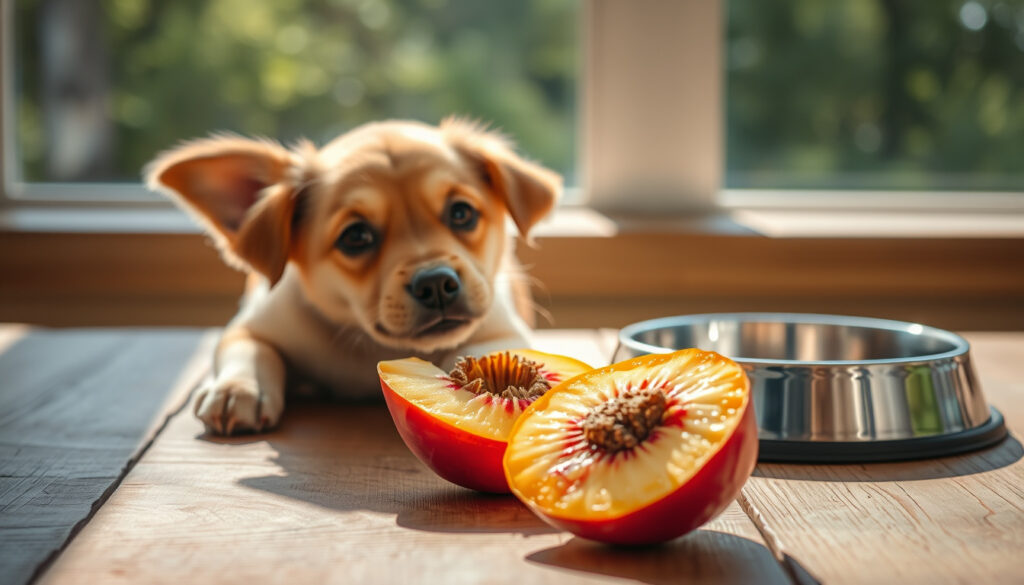
Can Dogs Eat Peaches? Safety, Risks & Feeding Guide
If your dog just snagged a peach slice off the counter, you’re probably wondering whether to worry. The short answer: the fleshy part is safe in moderation, but the pit is a genuine hazard. Peaches pack vitamins A and C, yet that same fruit carries cyanide in its stone—something most dog owners never think twice about until it’s too late.
Safe part: Flesh only ·
Key vitamins: A and C ·
Pit risk: Cyanide ·
Feeding rule: 90/10 ·
Top sources: ASPCA, PetMD
Quick snapshot
- Flesh provides vitamins A, C, antioxidants (PetMD)
- Pits contain amygdalin, a cyanogenic glycoside (MetLife Pet Insurance)
- Peach skin is generally safe if washed (PetMD)
- Exact safe quantity per dog size
- How many pits actually cause toxicity varies by individual
- Symptoms appear within minutes to hours after pit ingestion (Dial A Vet)
- Feed only pit-free flesh; consult vet if pit swallowed
These key facts establish what every dog owner needs to know before sharing a peach.
| Fact | Detail |
|---|---|
| Flesh safe? | Yes, in moderation |
| Pit toxic? | Cyanide present (amygdalin) |
| Skin okay? | Possible digestive upset |
| Water content | 89% |
| Calories | Low treat |
| Fat content | Zero saturated fats |
| Scientific name | Prunus persica |
| Canned safety | Unsafe due to sugar/syrup |
Can dogs eat peaches with skin?
Peach skin is generally safe for dogs if the fruit has been thoroughly washed to remove pesticide residue. According to PetMD (veterinary nutrition authority), peach skin can even provide additional fiber. However, some dogs have sensitive stomachs, and the fuzzy texture may cause mild digestive upset.
Skin benefits for dogs
- Extra dietary fiber aids digestion
- Contains antioxidants in the peel
- Readily available when fruit is washed
Skin risks for dogs
- Pesticide residue if not organic or washed
- Fuzzy texture may irritate some dogs’ GI tracts
- Could cause vomiting if dog is sensitive
The implication: washing the peach matters more than removing the skin. For most dogs, a well-rinsed peach with skin is fine—just skip the pit every single time.
What fruit can’t dogs eat?
Several fruits pose serious risks to dogs, and peach pits rank among the most dangerous. The ASPCA (official animal poison control authority) lists Prunus persica as toxic due to cyanogenic glycosides in stems, leaves, and seeds. Beyond peaches, grapes, raisins, avocados, and cherries all carry specific hazards.
Grapes and raisins
Grapes and raisins can cause acute kidney failure in dogs. Even small amounts are dangerous—there’s no safe quantity.
Avocado
Avocados contain persin, which can cause vomiting and diarrhea. The pit is also a choking hazard.
Cherry pits
Like peach pits, cherry pits contain amygdalin that releases cyanide when chewed. PetMD notes that cyanide toxicity from stone fruit pits can be deadly within minutes, with gums turning bright cherry red as the blood loses its ability to release oxygen to cells.
What this means: not all fruit dangers look the same. Peach pits are mechanical (choking, blockage) plus chemical (cyanide), while grapes are purely chemical kidney damage. Know the difference before your dog investigates the fruit bowl.
Peach pits require chewing or breaking to release cyanide. Swallowing a whole pit intact is still risky—it’s a choking and blockage hazard even if the cyanide stays locked inside.
Can dogs eat peaches in a jar?
Jared peaches are not safe for dogs. Canned peaches in syrup contain excessive sugar that can trigger blood sugar spikes, contribute to obesity, and increase diabetes risk. MetLife Pet Insurance (pet insurance provider) warns that some canned products may also contain xylitol as a preservative, which is lethal to dogs.
Syrup risks
- High sugar content causes blood sugar spikes
- Regular consumption leads to weight gain and diabetes
- Xylitol in some products is toxic to dogs
Canned vs fresh
Fresh peaches have natural sugars and full nutrient profiles. Canned peaches in syrup have concentrated sugars and lose some vitamin content during processing. A fresh peach, pit removed and cut into small pieces, is the only acceptable form for your dog.
The trade-off: owners often choose canned fruit for convenience, but for dogs, that convenience comes with real health costs. Fresh is the only reliable option.
Can dogs eat nectarines?
Nectarines are closely related to peaches and carry the same risk profile. Dial A Vet (veterinary clinic) confirms that the cyanide pit danger applies equally to nectarines. The flesh is safe in moderation, but the pit must always be removed.
Similar to peaches
- Same nutritional benefits: vitamins A and C, fiber
- Same pit toxicity from amygdalin
- Same choking and blockage risks
Pit dangers
- Cyanide release if chewed or broken
- Intestinal blockage if swallowed whole
- Tooth damage from hard pit shell
Why this matters: if your dog sneaks a nectarine from the counter, the same rules apply—flesh only, no pit. The close kinship means you can treat nectarines exactly like peaches in your feeding guidelines.
A dog owner in Georgia reportedly uses peaches as a summer hydration treat for her dog—peaches are 89% water—but only ever gives pit-free flesh. That’s the right instinct.
What is the healthiest fruit for dogs?
Blueberries often top the list as a superfood for dogs, but peaches hold their own as a mid-tier option with specific benefits. GoodRx (pet health resource) notes that peaches are low in calories, contain no saturated fats, and provide fiber that aids digestion and guards against cancer through antioxidant activity.
Blueberries top the list
- High antioxidants, low sugar
- Easy to serve, no prep needed
- Supports brain health in senior dogs
Apples safe without seeds
- Crunchy texture cleans teeth
- Vitamin A and C similar to peaches
- Seeds contain cyanide—always remove
Peaches moderate choice
- Excellent hydration due to 89% water content
- Vitamins A for skin and vision, C for immune function
- Zero saturated fats support weight management
The pattern: three healthy fruits, three different strengths. Blueberries win for antioxidants, apples for dental health, peaches for hydration. Rotate them for variety—but always under the 90/10 treat rule, where snacks stay below 10% of daily calories.
Upsides
- Peach flesh provides vitamins A, C, antioxidants
- 89% water content aids hydration
- Zero saturated fats support weight management
- Fiber improves digestion
- Low calories as a treat
- Safe skin if washed
Downsides
- Pits contain cyanide (amygdalin)
- Pits are choking and blockage hazards
- Canned peaches unsafe due to sugar
- Skin may cause GI upset in sensitive dogs
- Excess fiber causes diarrhea
- Peach foliage and stems also toxic
How to feed peaches to your dog safely
Follow these steps to give your dog a peach treat without the risk. If your dog just bit into a peach slice, you can find more information on Sno Pac congelats d’espinacs retirats del mercat.
- Wash thoroughly. Rinse the peach under running water to remove pesticides, even if you plan to remove the skin.
- Remove the pit. Cut the peach in half and twist out the pit. Never give your dog a whole peach or any part with the pit still inside.
- Peel the skin (optional). If your dog has a sensitive stomach, remove the skin. For most dogs, washed skin is fine.
- Cut into small cubes. Slice the flesh into bite-sized pieces appropriate for your dog’s size. Small dogs need very small pieces.
- Limit portions. Treats should stay under 10% of daily calories. A few small cubes are plenty for a medium-sized dog.
- Monitor for reactions. Watch for signs of digestive upset, excessive drooling, or breathing difficulty—then call your vet immediately.
Signs of cyanide poisoning include excessive drooling, dilated pupils, breathing difficulty, dizziness, and shock. Cyanide poisoning from peach pits can manifest within minutes to hours. If you suspect your dog chewed or swallowed a pit, contact your vet or the ASPCA Poison Control line immediately.
What experts say
“In large doses, cyanide can be fatal, but most dogs would have to consume a lot of peach pits before succumbing to cyanide poisoning.”
— MetLife Pet Insurance (pet insurance provider)
“Cyanide toxicity can be deadly in only a few minutes. The gums turn bright cherry red, indicating that the oxygen in the blood cannot be released to the cells, essentially causing suffocation.”
— PetMD (veterinary toxicology resource)
“Peaches contain 89% water which makes them a perfect hydrating treat for your dog.”
— Nextrition Pet (pet nutrition blog)
For dog owners, the choice is straightforward: fresh, pit-free peach flesh in small amounts, fed as an occasional treat. Canned peaches, syrup, and anything with the pit are off the menu. If your dog does get into a peach with a pit, call your vet right away—even if the dog seems fine, cyanide effects can be fast.
Related reading: Colloidal Silver for Dogs – Safety, Uses and Risks Guide
wagwalking.com, us.ziwipets.com, petmd.com, chewy.com, countrysidevets.com
While peach flesh offers vitamins A and C in moderation, this detailed peach safety guidestresses removing the pit first to avoid cyanide poisoning risks.
Frequently asked questions
What fruit should dogs avoid?
Dogs should avoid grapes, raisins, avocados, cherries, and any canned fruit in syrup. Peach pits and seeds from stone fruits are particularly dangerous due to cyanide content. The ASPCA maintains a full toxic and non-toxic plant list for reference.
What is the 90/10 rule for dogs?
The 90/10 rule means that 90% of a dog’s daily calories should come from their regular, balanced dog food, while no more than 10% comes from treats and extras. Peach flesh should be counted as a treat and kept within that 10% limit.
Can dogs eat peaches in syrup?
No. Canned peaches in syrup are unsafe due to high sugar content, which can cause obesity, diabetes, and blood sugar spikes. Some syrups may also contain xylitol, which is toxic to dogs.
Can dogs eat peaches from a cup?
Peaches from a cup typically means canned peaches in liquid. These are not safe due to the syrup. If the cup contains fresh peaches you’ve prepared yourself, with the pit removed and cut into small pieces, it can be a healthy treat in moderation.
Can dogs eat peach yogurt?
Plain, unsweetened yogurt with no xylitol is generally safe for dogs, but peach yogurt typically contains added sugars and artificial sweeteners that are harmful. If you want to give yogurt, choose plain, dog-safe plain yogurt without flavoring.
What is the number one food you should never feed your dog?
Grapes and raisins are among the most dangerous foods for dogs, causing acute kidney failure even in small quantities. Chocolate, xylitol, onions, and garlic are also highly toxic. Peach pits are a mechanical and chemical hazard but less immediately lethal than grapes in terms of quantity needed.
How many peaches can a dog eat?
A few small cubes of peach flesh are enough for a medium-sized dog per day. Small dogs should get even less. Watch for signs of digestive upset, and if your dog tolerates peaches well, you can offer a small amount a few times per week as a treat.
More related posts
 What Doctors Say Is the Fastest Way to Cure a Stomach Ulcer?
 The Diplomat Season 3: Release Date, Episodes, Cast & Ending
 Joe Cocker Net Worth, Cause of Death, and Biography
 Science and Technology Museums – Top Global Destinations 2025
 Smoke (TV Series) – Jodie Comer Cast, Plot, Release Date
 NFL Mock Draft Simulator – Best Free Tools for 2025
 TD Active Trader Login: Complete Access & Practice Guide
 Meat Shop Near Me – Top Clarksville Butchers Guide