What to Do to Relax at Home: 5-Minute Stress Relief
Feeling tense and looking for a way to unwind without leaving the house? Breathing exercises offer one of the simplest paths forward. The 4-7-8 technique—involving a precise 4-second inhale, 7-second hold, and 8-second exhale—has become a go-to method for calming anxiety and preparing for sleep. Best of all, both the 4-7-8 and the sensory grounding approach known as 5-4-3-2-1 can be done anywhere in under five minutes.
Quick techniques available: 5 minutes or less · Breathing methods detailed: 4-7-8, 5-4-3-2-1, 3-3-3 · Grounding rules explained: 54321 sensory focus
Quick snapshot
- 4-7-8 uses 4-second inhale, 7-second hold, 8-second exhale per cycle (Macula Retina)
- Exact clinical trial data quantifying efficacy remains limited (Macula Retina)
- Both techniques gained significant traction in Spanish media throughout the 2020s (Macula Retina)
- Practitioners can expect broader integration into telehealth anxiety programs (Policlínica La Real)
Key facts from health authorities about these relaxation techniques:
| Fact | Detail | Source |
|---|---|---|
| Fastest methods | 5 minutes per technique | Policlínica La Real |
| Sensory grounding | 5-4-3-2-1 method | El Español |
| Breathing cycle | 4-7-8 inhale-hold-exhale | Macula Retina |
| Creator | Dr. Andrew Weil (Harvard) | Policlínica La Real |
| 5-4-3-2-1 senses | 5 see, 4 touch, 3 hear, 2 smell, 1 taste | El Español |
What can I do to relax at home?
Home relaxation relies on two powerful approaches: breathing exercises that directly calm your nervous system, and sensory grounding techniques that redirect your mind away from anxious thought loops. Both require no equipment and take effect quickly.
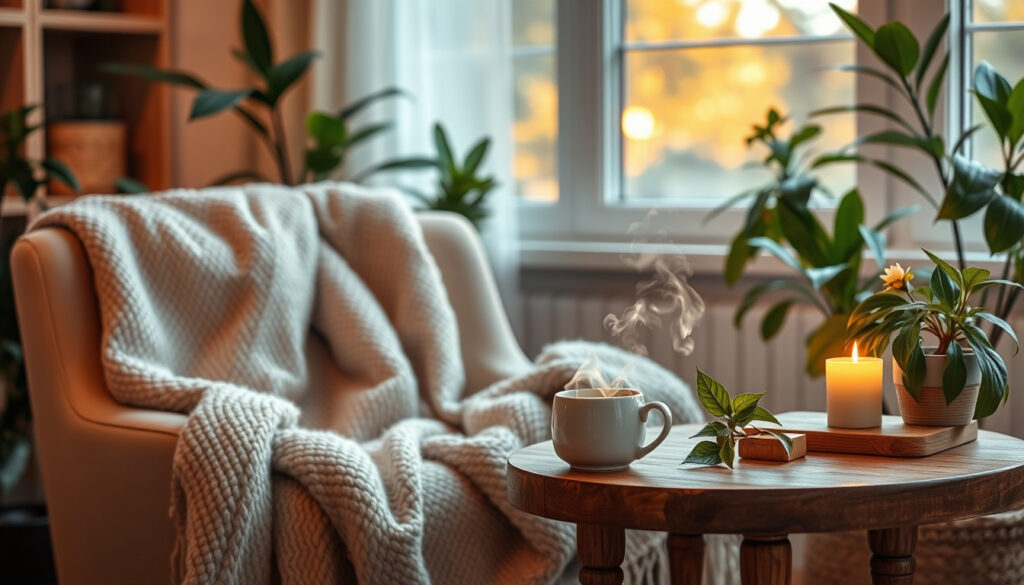
Create a relaxation corner
- Choose a quiet room with soft lighting
- Add a comfortable chair or cushion
- Keep the space free from digital interruptions
- Include plants, candles, or soft textures if helpful
Daily activities for calm
- Reading a book for 10-15 minutes lowers cortisol levels
- Listening to music triggers dopamine release and reduces anxiety
- A warm bath activates parasympathetic responses
Listen to music
- Slow-tempo instrumental tracks (60-80 BPM) promote relaxation
- Nature sounds provide natural stress relief
- Personal preference matters—choose what genuinely soothes you
What this means: Having a dedicated space removes friction from practice, so you are more likely to reach for these techniques when stress hits.
How to relax quickly and easily?
Both breathing exercises and grounding techniques offer near-immediate effects. The key is choosing the right tool for your current state: if your mind is racing, grounding redirects attention outward; if your body feels tight, breathing works from the inside out.
Simple home routines
- Sit comfortably and close your eyes
- Choose either breathing (4-7-8) or grounding (5-4-3-2-1)
- Complete 2-4 cycles or rounds
- Notice the shift in how your body feels
Quick de-stress activities
- 5-4-3-2-1 grounding interrupts anxiety in seconds
- Deep breathing reverses the sympathetic nervous system’s stress response
- Both techniques require no equipment and can be done standing or sitting
For anyone who feels stuck in a stress spiral at home, these techniques offer a practical exit ramp. The 5-4-3-2-1 method works in under a minute, while 4-7-8 delivers measurable nervous system calming within two minutes.
The implication: When you know both techniques, you can switch between them depending on whether anxiety shows up as racing thoughts or physical tension.
How to eliminate stress in 5 minutes?
Five minutes is enough time for meaningful nervous system regulation. The key is consistency—practicing when you don’t need it builds the skill for when you do.
Teladoc solutions
- Guided breathing exercises typically run 3-5 minutes
- Remote coaching can personalize technique selection
- Apps like Calm or Headspace offer structured breathing programs
Immediate techniques
- 5-4-3-2-1 grounding: 30-60 seconds for anxiety interruption
- 4-7-8 breathing: 2-4 minutes for deep calming effect
- Combined approach: ground first, then breathe for enhanced result
What are 5 techniques to relax?
Five core relaxation techniques emerge from health authority guidance: breathing rhythms, sensory grounding, progressive muscle relaxation, guided imagery, and mindful body scanning. Each targets a different pathway to calm.
Breathing exercises
- 4-7-8: inhale 4 seconds, hold 7 seconds, exhale 8 seconds
- Box breathing: equal 4-second counts for inhale, hold, exhale, hold
- Diaphragmatic breathing: focus on stomach rise rather than chest
Grounding methods
- 5-4-3-2-1: name 5 things you see, 4 you touch, 3 you hear, 2 you smell, 1 you taste
- 3-3-3 rule: name 3 sounds, 3 sights, 3 physical sensations
- Body scan: systematically notice sensation from feet to head
Stress affects an estimated 1 in 4 adults globally. Having reliable, tool-free techniques available at home means people don’t have to wait for professional support to begin feeling better.
The implication: These five techniques cover the main pathways through which stress enters the body, giving you multiple angles of attack.
What is the 5-4-3-2-1 rule for anxiety?
The 5-4-3-2-1 technique is a mindfulness grounding exercise that pulls anxious attention back to the present moment through your senses. Psychologists recommend it specifically for breaking anxiety loops that keep the mind stuck in threat-mode thinking.
How to use sensory grounding
- Look around and name 5 things you can see right now
- Notice 4 things you can physically touch
- Identify 3 sounds in your environment
- Find 2 things you can smell
- Name 1 thing you can taste
54321 method steps
- Practice in a calm environment first to build the skill
- Move through senses systematically without rushing
- Repeat with a deep breath at the end for enhanced effect
- Use before exams, interviews, or high-pressure moments
El Español reports that the 5-4-3-2-1 method is an exercise of mindfulness or full attention that helps reduce anxiety
What is the 4-7-8 breathing rule?
The 4-7-8 technique is a breathing rhythm developed by Harvard physician Dr. Andrew Weil. It draws from yogic pranayama traditions and specifically targets anxiety reduction and sleep preparation. The extended exhale phase activates the parasympathetic nervous system, reversing your body’s stress response.
Steps for relaxation and sleep
- Place the tip of your tongue behind your upper front teeth and keep it there throughout
- Empty your lungs completely before beginning
- Inhale silently through your nose for 4 seconds
- Hold your breath for 7 seconds
- Exhale completely through your mouth with a whooshing sound for 8 seconds
- Repeat for 4 cycles or until you feel relaxed
Beginner modifications
- Shorten the timing to 2-3.5-4 seconds if holding your breath is difficult
- Start with 2 minutes of practice and extend as comfort grows
- Practice lying on your back initially for better breath awareness
Fundació Pasqual Maragall notes that 4-7-8 is based on yogic pranayama tradition and helps reduce heart rate, blood pressure, and stress while aiding sleep
What is the 3-3-3 rule for stress?
The 3-3-3 rule offers a simpler grounding alternative when the full 5-4-3-2-1 feels too involved. It works particularly well for moments when anxiety spikes suddenly and you need the fastest possible reset.
Anxiety coping tips
- Name 3 sounds you can hear right now
- Name 3 things you can see
- Name 3 physical sensations you feel (touch something, notice your feet on the floor)
When to use it
- During acute anxiety spikes when racing thoughts take over
- In public spaces where you need a discreet technique
- As a quick precursor to deeper breathing work
Related reading
- How to Be Happy – Proven Habits from Harvard Study
- El Litoral – 5-4-3-2-1 grounding guide
- Psiquion – Anxiety grounding blog
Related reading: How to Be Happy – Proven Habits from Harvard Study · Sex on the Beach – Classic Recipe, History and Tips
blog.fpmaragall.org, aquilea.com, youtube.com, youtube.com, youtube.com, psicologalaura.es, youtube.com
Frequently asked questions
How to de-stress at home?
Start with 5-4-3-2-1 grounding if your mind is racing, or 4-7-8 breathing if your body feels tense. Both techniques work in under five minutes and require no equipment. Creating a dedicated relaxation corner with comfortable seating and minimal distractions supports longer practice sessions.
How to relax for sleep?
The 4-7-8 technique specifically supports sleep preparation. Practice 2-4 cycles while lying down, focusing on the extended exhale to activate your parasympathetic nervous system. Avoid screens for 30 minutes before bed and keep the room cool and dark.
What activities relax quickly?
Grounding techniques work fastest—5-4-3-2-1 can interrupt anxiety in under a minute. Reading a chapter or listening to a single song also provides meaningful mental reset. Warm baths trigger parasympathetic responses through temperature regulation.
How does breathing help stress?
Controlled breathing directly stimulates the vagus nerve, activating your parasympathetic nervous system. This lowers cortisol, reduces heart rate, and eases muscle tension. The 4-7-8 technique specifically uses extended exhales to maximize this effect.
Are home spas effective?
Creating a home relaxation space with comfortable seating, soft lighting, and minimal digital interruptions supports nervous system recovery. The environment matters less than the intentional practice—sensory grounding and breathing work regardless of setting.
What music relaxes best?
Slow-tempo instrumental music (60-80 BPM) consistently promotes relaxation, though personal preference matters. Nature sounds, ambient music, and familiar favorites all work. The key is choosing audio that genuinely soothes rather than stimulates.
Can reading reduce anxiety?
Reading for even 10-15 minutes measurably lowers cortisol levels and provides mental distraction from anxious thought loops. Fiction works particularly well because it requires imaginative engagement that pulls attention away from stress.
Is ordering space relaxing?
Creating physical order in your environment reduces cognitive load and supports mental calm. Decluttering a single surface or organizing one drawer provides a small but meaningful sense of control that counteracts stress.
More related posts
 What Doctors Say Is the Fastest Way to Cure a Stomach Ulcer?
 NWH-UN Stock Analysis: Price Target, Dividend Yield, Forecast
 What Is Habeas Corpus – Definition, History, Process Explained
 Cotelette de Porc au Four – Juicy Oven Recipe Guide
 Card Shops Near Me – Find Local Trading Card Stores
 How Much is OAS in Canada? 2026 Rates, Eligibility & Tips
 The Diplomat Season 3: Release Date, Episodes, Cast & Ending
 Emma Stone Poor Things – Oscars, Plot, Reviews, Where to Watch